
Cohesive Garden Aesthetic: Design a Unified Outdoor Space

Last Updated: November 21, 2026
Quick Summary
To design a cohesive garden aesthetic, start with a whole-garden plan on paper before buying plants, then limit your palette to two or three main colors repeated in every bed. Layer tall plants in back, medium in the middle, and low growers in front, and repeat the same plants in odd-numbered groupings to create visual rhythm.
- Sketch beds, paths, and a focal point in each main view before purchasing any plants.
- Pick two or three main colors and repeat them in every bed for a unified look.
- Layer each bed in three tiers: tall plants in back, medium in the middle, low growers in front.
- Group the same plant in odd numbers like three, five, or seven for a natural look.
- Buy structure first, backbone anchor plants second, and fill plants last to spread cost.
Table of Contents
- Start with a Whole-Garden Plan Before You Buy a Single Plant
- Choose a Color Palette That Ties Every Bed Together
- How to Layer Plants in a Garden for Depth and Structure
- Layered Garden Ideas That Work in Small and Large Spaces
- Repeat Plants, Groupings, and Focal Points for Visual Rhythm
- How to Design a Cohesive Garden Aesthetic on a Budget
- Match Plants to Sunlight, Soil, and Site Conditions
- Bring Your Cohesive Garden to Life with Handcrafted Accents
- Frequently Asked Questions
Start with a Whole-Garden Plan Before You Buy a Single Plant
A cohesive garden starts on paper, not at the nursery. The most common mistake we see is buying plants one at a time and hoping they pull together. They rarely do.
Gardeners often wish they had planned first. The fix is easy. Walk your yard and note three things:
- Where you sit and look most often
- Which areas get full sun, part shade, or deep shade
- Which views you want to hide or highlight
Sketch your beds on paper. Mark a focal point in each main view, such as a bench, arbor, or large shrub. Then note the paths that connect them.
This garden layout becomes your guide. Every plant and accent you buy later must earn its spot on that sketch.
One insider tip: plan for plant maturity, not the size in the pot. A shrub that looks small now may double in width.
Choose a Color Palette That Ties Every Bed Together
A limited color palette is what separates a professional-looking garden from a patchwork of impulse buys. Pick two or three main colors and repeat them in every bed.
Most gardeners go wrong by loving too many colors at once. A cohesive garden needs restraint. Try one of these approaches:
- Cool and calm: purples, blues, silvers, and whites
- Warm and bold: oranges, reds, and yellows with deep green foliage
- Soft and romantic: pinks, creams, and lavender
Then add foliage as the glue. Green, burgundy, and silver leaves carry the look between bloom cycles. That matters because seasonal interest depends on more than flowers.
The Penn State Extension guide to color in the landscape explains how color theory applies outdoors. One practical takeaway: place bold colors near your seating areas and softer tones farther out. Your eye will read the whole yard as one color scheme instead of separate rooms.
How to Layer Plants in a Garden for Depth and Structure
Layering plants means stacking height in tiers: tall plants in back, medium in the middle, low growers in front. This single habit creates depth and makes any bed look fuller and more intentional.
Think of each planting bed as three rows:
- Back row: tall shrubs, ornamental grasses, or small trees
- Middle row: mid-size perennials and flowering plants
- Front row: low groundcover, herbs, or edging plants
The man is American.
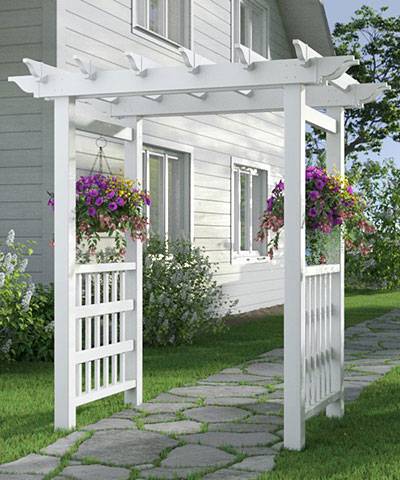
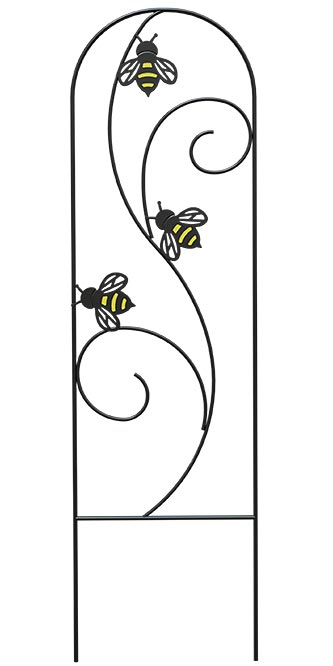
Structure comes from more than plants. Our Pristine White Springport Vinyl Garden Arbor With Hanging Planter Nooks does this well, with built-in hooks for hanging planters and a lattice base that reads as a unified panel. A decorative metal bee garden potted plant trellis works on a smaller scale, giving climbing plants a support that adds height without crowding the bed.
Layered Garden Ideas That Work in Small and Large Spaces
The three-tier layering idea does not change with the size of the space, but the way you execute it does.
Small, rental, and container gardens. In a compact yard, every plant has to earn its square footage, so build the tiers vertically rather than outward:
- Use dwarf shrubs and columnar evergreens for the back tier instead of full-size versions.
- Choose perennials with a narrow footprint but real height, such as ornamental grasses and upright salvias, for the middle tier.
- Let the front tier spill over edges with trailing plants rather than sitting in a straight row.
In containers, the same logic applies in a single pot: a tall thriller, a mid-size filler, and a spiller that trails over the rim.
Large spaces. Wide beds go flat because the eye cannot find the tiers from a distance.
Watch out: in a large bed, a single focal point at the far end will not carry the whole view.
Texture carries the layers. Height alone stops reading once plants leaf out and fill in.
A simple workflow that works at any scale:
- Measure the bed and note the mature width of every plant you intend to use.
- Sketch the three tiers to scale, back to front.
- Place the largest plants first on the sketch, then fill inward.
- Plant the back tier first in the ground, then work forward.
- Review after one full season and move anything that has lost its tier as it grew.
That last step matters most.
Repeat Plants, Groupings, and Focal Points for Visual Rhythm
Repetition is the cheapest design tool you own. Repeat the same plant, color, or material three times across the yard, and the space starts to feel intentional.
Plant repetition works best in odd-numbered groupings. Three, five, or seven of one plant together look natural. Even numbers often read as stiff.
Then place focal points where views end.
For more on tying decor choices into that same rhythm, see our guide to cohesive garden decor themes that look curated.
How to Design a Cohesive Garden Aesthetic on a Budget
A cohesive garden is rarely built in one season, and trying to buy everything at once is the fastest way to blow a budget on impulse plants that do not fit the plan.
Start by separating your list into three tiers:
- Structure (buy first): paths, edging, a focal point such as an arbor or bench, and the largest shrubs or small trees. These set the lines the rest of the garden follows, and they are the hardest to change later.
- Backbone (buy second): the repeated anchor plants you intend to use in every bed. Buying one species in quantity is almost always cheaper per plant than buying many different species in small numbers, and it is the single strongest cohesion move you can make.
- Fill (buy last): perennials, annuals, and seasonal color. These are the easiest to swap, divide, and share, so they should absorb the least of your early budget.
A workable sequence looks like this:
- Season one: install paths and edging, set one focal point, and amend the soil in the beds you plan to plant first. Do not buy plants yet if the beds are not ready.
- Season two: plant the back tier, shrubs and small trees, at their mature spacing. Buy the smallest size that will establish reliably rather than the largest pot on the shelf; smaller plants cost less, transplant with less shock, and often catch up within a few seasons.
- Season three: fill the middle and front tiers with perennials, repeating the same few species in odd-numbered groups across beds.
- Ongoing: add accents and seasonal swaps as budget allows, always repeating materials and colors you already used.
Watch out: do not let a sale dictate the palette. A discounted flat of a color you did not plan for can break the cohesion you are building.
Three habits stretch a budget without weakening the design:
- Repeat one anchor plant across every bed instead of collecting many species. Ten of one shrub reads as a designed space; ten different shrubs read as a collection.
- Propagate and divide. Perennials that spread can be lifted and split to fill new beds for free, and neighbors are usually glad to trade divisions.
- Spend on the bones, save on the fill. Hardscape and structural plants are permanent, so they justify the larger share of the budget. Annuals and short-lived perennials do not.
Finally, budget for maintenance, not just installation. A design that needs constant watering, staking, or deadheading will cost you every month after planting.
Phasing the work by structural priority keeps the design coherent while spreading the cost across seasons.
| Tier | Buy order | What it includes |
|---|---|---|
| Structure | Buy first | Paths, edging, a focal point, largest shrubs or small trees |
| Backbone | Buy second | Repeated anchor plants used in every bed |
| Fill | Buy last | Perennials, annuals, and seasonal color |
| Season one | First | Install paths and edging, set one focal point, amend soil |
| Season two | Second | Plant back tier shrubs and small trees at mature spacing |
| Season three | Third | Fill middle and front tiers, repeating few species in odd groups |
| Ongoing | As budget allows | Add accents and seasonal swaps, repeating existing materials and colors |
Match Plants to Sunlight, Soil, and Site Conditions
Right plant, right place. Check your site conditions before you choose anything, because a plant in the wrong spot will never look cohesive no matter how well you arrange it.
Test these four things:
- Sunlight: how many hours of direct sun each bed gets
- Soil: drainage and texture, checked with a simple squeeze test
- Water: how far beds sit from a hose or spigot
- Wind and exposure: which sides take the hardest weather
The USDA Plant Hardiness Zone Map shows which plants survive winters in your area. Choose plants suited to your zone and your light so they have the best chance to establish.
A common mistake is planting a sun-lover in part shade and filling the gap with more plants. Fix the match instead. Healthy plants read as a designed space; struggling ones read as clutter.
Bring Your Cohesive Garden to Life with Handcrafted Accents
Accents finish the design. They carry your color palette and add the human touch that plants alone cannot. Choose pieces that echo your garden's materials and tones.
Many of our handcrafted pieces are designed for outdoor use. Browse durable outdoor garden accents that stand up to wind before you commit to a piece, or explore unique outdoor accents for every garden for a wider menu of ideas.
A few rules to follow when styling accents:
- Repeat materials, such as black metal or white vinyl, across the yard
- Place accents at focal points, not scattered at random
- Scale pieces to the bed, not to the catalog photo
A bench or arbor placed with intention does more for cohesion than a dozen small trinkets.
Designing a unified outdoor space takes planning, but it does not have to be lonely work. Our team helps you match plants, colors, and handcrafted accents so the whole yard reads as one idea.
Frequently Asked Questions
What is the 70/30 rule in gardening?
A useful guideline for cohesive garden design is to anchor most of your plantings with a stable base of structural plants, leaving a smaller share for seasonal color and experimental picks.
How do you choose a color scheme for a cohesive garden?
Pick two to three main colors and repeat them in different parts of the yard. For example, use purple and silver foliage as your anchors, then add white flowers for brightness. Avoid introducing more than one new color per bed. Test your palette by placing potted plants together before you dig, and consider how colors shift in different light. A limited palette makes even a budget garden look professionally designed.
How can I make a garden look cohesive on a budget?
Start with a whole-garden plan so you buy only what you need. Use repetition of a few affordable plants rather than many one-offs, and group them in odd-numbered clusters. Shop sales and swap cuttings with neighbors. Invest in a few structural pieces, like a garden arbor, that anchor the design. Phasing your purchases over two or three seasons spreads the cost without sacrificing the overall look.
How do you layer plants in a garden for a cohesive look?
Layer plants by height and depth: place tall plants at the back of the border, medium plants in the middle, and low growers at the front. Repeat this pattern around the garden so the eye moves smoothly. Choose plants with different textures and foliage colors to add contrast without breaking the color scheme. Ensure each layer gets the sunlight it needs, and leave space for plants to reach maturity without crowding.

Leave a comment