
How to Choose Artisan Garden Decor Style for Your Yard

Last Updated: November 22, 2026
Quick Summary
To choose artisan garden decor, first audit your hardscape, plants, and home exterior, then name your style in one phrase and let that guide every piece. Set scale with two measurements, pick a budget tier, and buy your focal point before accents. Test the plan with a cardboard cutout before you order.
- Walk your yard with a notebook to audit hardscape, plants, and home exterior.
- A statement piece should read at roughly one-third the visual width of its bed.
- Split your budget into one statement piece at half and two accents at a quarter each.
- Choose one primary material and one accent material, and repeat them across pieces.
- Do a paper test with cardboard cutouts to catch scale mistakes before buying.
Table of Contents
- Start With Your Garden's Existing Style and Architecture
- A Step-by-Step Framework for Choosing Artisan Garden Decor
- Garden Ornaments Ideas That Match Rustic, Modern, and Whimsical Looks
- Outside Garden Decor That Balances Scale, Proportion, and Traffic Flow
- Whimsical Garden Decor: Adding Personality Without Clutter
- Garden Sculpture Placement: Creating a Focal Point That Works Year-Round
- Durability, Maintenance, and Choosing Pieces for Your Climate
- Building a Cohesive Collection With In the Garden and More
- Frequently Asked Questions
Start With Your Garden's Existing Style and Architecture
The fastest way to choose artisan garden decor is to stop shopping and read the style story your yard, home, and hardscape already tell.
Customers often buy beautiful pieces that never quite fit. Usually the problem started here.
Audit the hardscape, plants, and home exterior
Walk your yard with a notebook and answer three questions:
- Hardscape: Is your patio brick, flagstone, concrete, or gravel? Formal or relaxed?
- Plants: Do you grow tidy boxwoods and roses, or loose native grasses and cacti?
- Home exterior: Is your house siding, brick, stone, or stucco? Painted trim or natural wood?
Match your answers. A brick colonial with clipped hedges leans traditional; a stucco home with gravel beds and succulents leans rustic or modern. Note your dominant materials, because artisan garden decor should echo them, not fight them.
A Step-by-Step Framework for Choosing Artisan Garden Decor
Here is a framework for choosing artisan garden decor. It takes about twenty minutes with a notebook and a phone camera.
Step 1: Name your style in one phrase
Stand at the end of your main path and take three photos: toward the house, down the longest bed, and of your entry. Look at the photos, not the yard, because photos strip out the distraction of chores.
Write one phrase describing the strongest signal, using a noun plus an adjective: "relaxed rustic," "clean modern," "cottage whimsical," "collected eclectic." If you cannot pick one, choose the one that matches your home exterior, since the house is the hardest thing to change.
People are often drawn to a style that fights their architecture. A mid-century ranch with clean lines rarely rewards heavy Victorian ironwork. Name the style your space already supports, then add personality inside that lane.
Step 2: Set your scale with two measurements
Measure the widest bed you want to decorate and the width of your entry or porch. Write both numbers down.
Use this rule of thumb: a statement piece should read at roughly one-third of the visual width of the bed it sits in. In a 12-foot bed, that means a visual footprint around 4 feet. On a 6-foot porch, a piece wider than about 2 feet starts to crowd the door swing.
Height matters too. A piece against a blank wall should rise to at least one-third the wall's height, or it reads as an afterthought. In an open bed with no backdrop, choose a wide base or a cluster of three smaller pieces instead.
Step 3: Choose a budget tier and a purchase order
Set a total number before you shop, then split it into tiers: one statement piece at roughly half your budget, two accents at roughly a quarter each, and the remainder held back for a second season.
Tier one: one statement piece, nothing else. Tier two: a statement piece plus two accents that repeat its material or color.
Buy in this order: focal point first, then pieces that frame it, then small accents that fill gaps.
If budget is the sticking point, it helps to understand why handcrafted garden decor costs more before you commit to a tier.
Step 4: Pick materials that match your climate and upkeep appetite
Choose one primary material and one accent material, and repeat them across every piece. Metal for year-round structure, glass for sparkle, wood for warmth, stone for weight.
Match the material to your maintenance tolerance. Maintenance needs vary by material, so consider how much upkeep you are willing to do. If you will not do the upkeep, choose the material that asks the least of you.
Step 5: Choose your focal point before anything else
Pick the spot the eye should land on first, then place your best piece there. Everything else supports it. A focal point should be visible from a window or main path, backed by contrast, and lit after dark if you use the garden in the evening.
Step 6: Test the plan before you buy
Before you order, do a paper test. Cut cardboard to the visual footprint of the piece and set it in the spot for a day. Look from the kitchen window, the driveway, and the main path. If it feels small, go up one size; if it crowds the path, move it into a bed.
This one step catches most scale mistakes and costs nothing but an afternoon.
Garden Ornaments Ideas That Match Rustic, Modern, and Whimsical Looks
Garden ornaments ideas work best when they match one clear style. Mixing all three looks accidental. Pick a lane, then vary within it.
| Style | Best Materials | Signature Pieces | Best For |
|---|---|---|---|
| Rustic | Weathered metal, wood, stone | Cactus and succulent sculpture, salvaged finds | Gravel beds, native plantings |
| Modern | Clean steel, glass, geometric forms | Minimal sculptures, gazing globes, mirrors | Patios, gravel borders, stucco walls |
| Whimsical | Painted metal, kinetic pieces | Wind bells, kinetic stakes, animal figures | Cottage beds, porches, family yards |
| Eclectic | Mixed, but repeated colors | Vintage finds plus one bold piece | Collected, layered gardens |
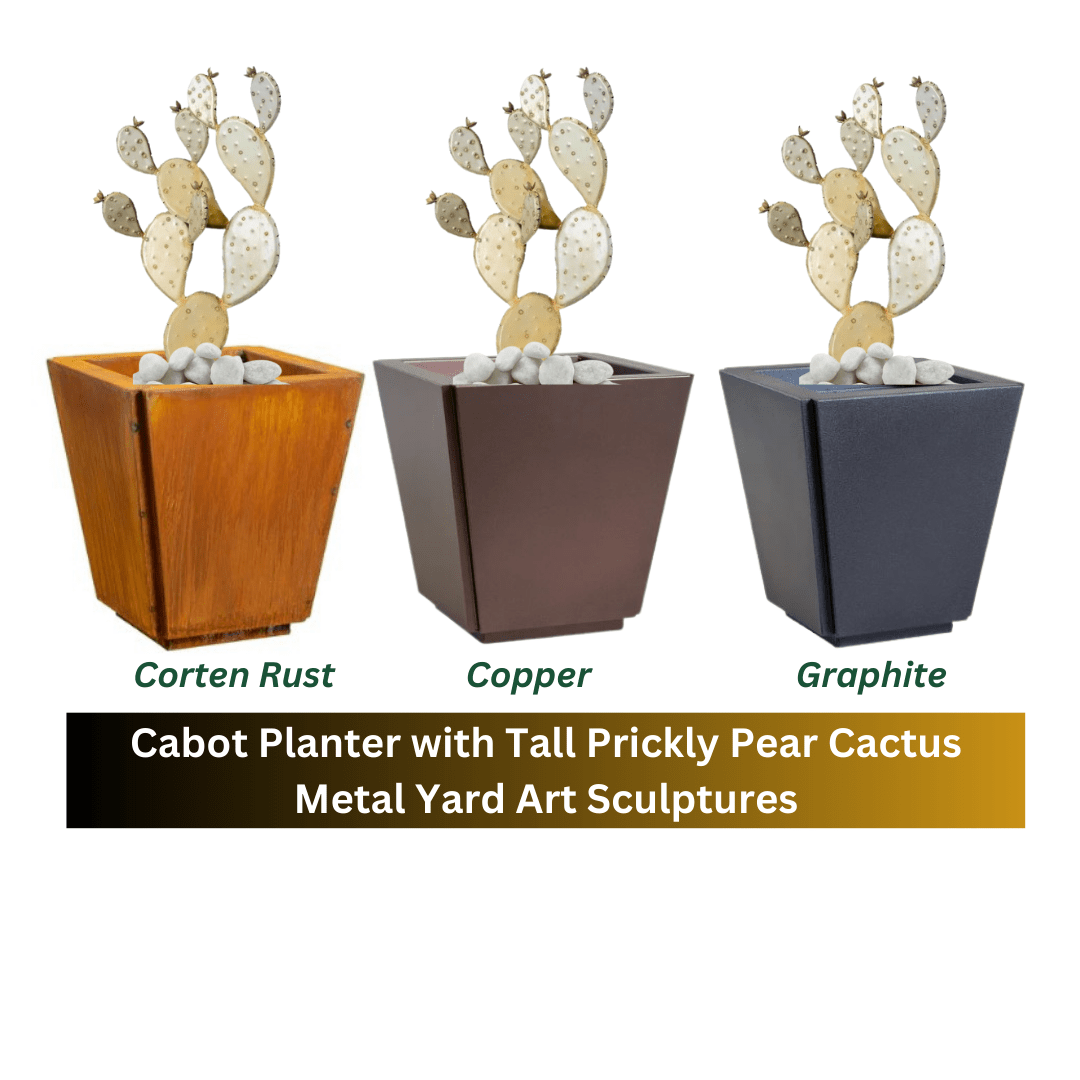
Rustic and modern readers who want a real piece in that lane should look at our prickly pear cactus metal yard art sculpture with planter. It reads modern in form and rustic in finish.
For more concrete ideas across all three looks, browse these decorations for garden concepts.
Outside Garden Decor That Balances Scale, Proportion, and Traffic Flow
Outside garden decor fails most often on scale, not taste. A piece that looks perfect in a photo can look lost in a large bed or crowded on a small porch.
Use this rule: your statement piece should fill roughly one-third of the visual width of the bed it sits in. Smaller accents fill the rest.
Then check traffic flow. Walk your normal path from the driveway to the door. Nothing should block it, catch a sleeve, or force a detour. Keep stakes and tall pieces at least a foot back from walkway edges.
Watch out: tall kinetic stakes placed in a narrow path become a hazard on windy days. Move them into a bed instead.
Whimsical Garden Decor: Adding Personality Without Clutter
Whimsical garden decor works when one playful piece carries the joke. Three playful pieces turn a garden into noise.
The rule we recommend: one whimsical focal point per viewing area. A porch, a patio, and a back bed can each have one. A single small bed should have none or one.
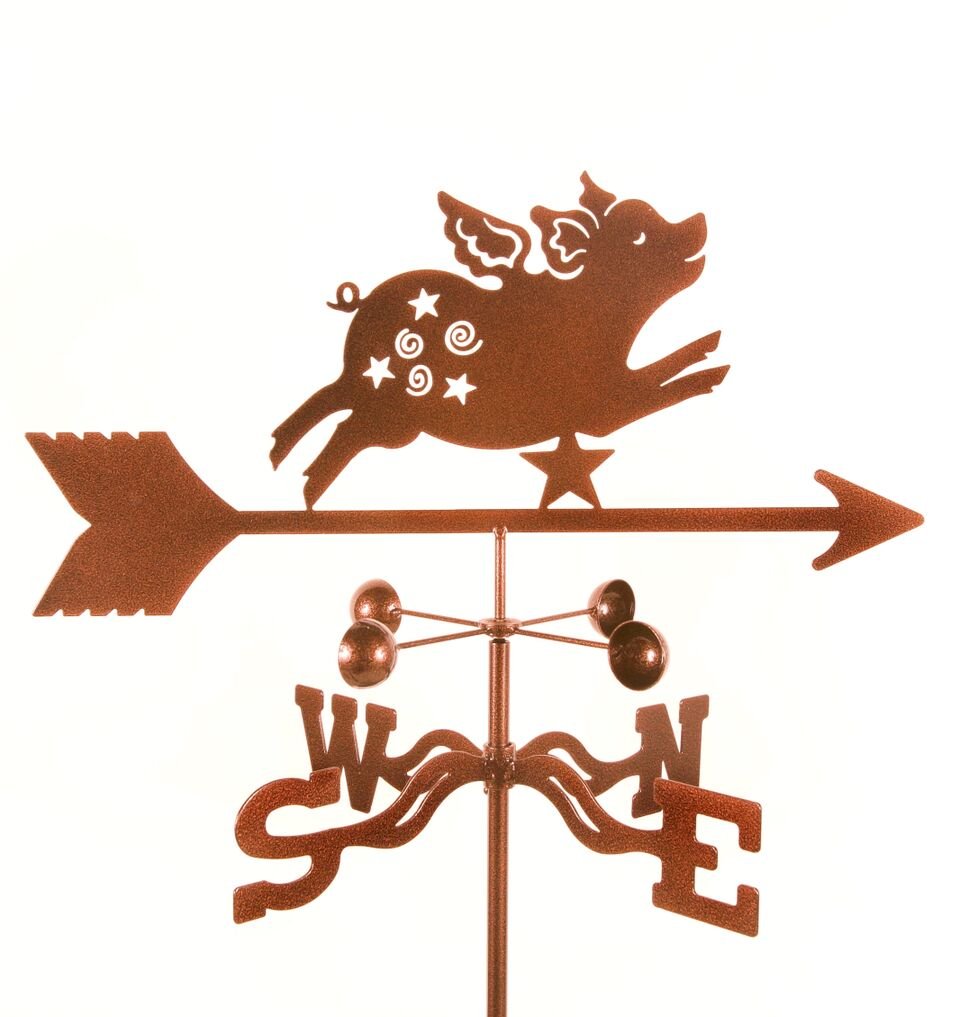
Our flying pig whimsical rain gauge garden stake weathervane is a good example of personality plus function. It adds humor and still tells you something useful.
Look for pieces that do double duty:
- Kinetic pieces that move in the breeze
- Rain gauges and weathervanes
- Bird feeders with sculptural shapes
- Planters with carved or painted detail
That way the whimsy earns its space.
Garden Sculpture Placement: Creating a Focal Point That Works Year-Round
Garden sculpture placement starts with one decision: where does the eye land first? Pick that spot, then place your best piece there.
Good focal points share three traits:
- Visible from a window or main path. You should see it daily.
- Backed by contrast. Place metal against green plants or a plain wall.
- Lit after dark. A small spotlight extends the piece into evening.
Our golden barrel cactus metal yard art sculpture is built for this role. It comes fully assembled with stakes, mounts to a concrete pad if you want extra security, and takes an optional spotlight.
If you are planning a bird bath as your focal point, see how to style garden bird baths for a bird-friendly yard.
Durability, Maintenance, and Choosing Pieces for Your Climate
Durability decides whether artisan garden decor survives its first winter. What you need is a material-by-material comparison of weather handling, upkeep, and year-round outdoor viability.
Material-by-material comparison
Powder-coated steel. Powder-coated metal is rust resistant and resistant to sun fading, which makes it a good choice for outdoor display.
Climate-specific checks
- Cold winters: Bring glass and ceramic indoors before hard freezes. Concrete pieces should be sealed or stored. Metal is the safest year-round choice.
- Hot, dry regions: Metal outperforms wood, which dries and splits. Choose lighter colors to reduce heat buildup on metal surfaces.
- Coastal yards: Salt accelerates corrosion. Choose cast aluminum or the highest-grade powder coat you can find, and rinse metal pieces monthly during the season.
- Rainy, humid summers: Drainage matters more than material. Any planter needs drainage holes, and any piece with a hollow base should drain freely.
Maintenance schedule that actually works
A simple annual rhythm keeps artisan pieces looking intentional:
- Spring: Rinse everything, inspect coatings, touch up chips, reseal wood.
- Midsummer: Check stakes and mounts after storms, tighten hardware, clear debris from drainage holes.
- Fall: Bring in glass and ceramic, seal concrete, store anything fragile.
- Winter: Leave metal and stone in place, and check after freeze-thaw cycles for heaving.
A common mistake is skipping the finish check because the piece looks great. Ask what the coating is. If the seller cannot tell you, keep looking. The finish is the difference between a piece that lasts a decade and one that rusts in two seasons.
Building a Cohesive Collection With In the Garden and More
A cohesive collection beats a random pile every time. Build slowly, repeat materials, and repeat one or two colors across pieces.
Start with your statement piece. Add one accent per season. Stop when the space feels full, not when the shelf is empty.
In the Garden and More carries handcrafted indoor and outdoor decor, many of which are proudly made in the USA.
Your garden already has a style. The work is reading it, then choosing pieces that echo it instead of competing with it.
In the Garden and More offers handcrafted decor, many of which are proudly made in the USA, in a curated selection of unique pieces that are hard to find elsewhere.
Frequently Asked Questions
What is the 3-5-7 rule in decorating, and does it work outdoors?
The 3-5-7 rule groups objects in odd numbers (three, five, or seven) of varying heights to create visual balance. Outdoors, it works well for clustered planters or a trio of metal sculptures, but a garden viewed from multiple angles needs more spacing than an indoor vignette. Use the rule as a starting point for a focal bed, then step back from three or four viewpoints to check the arrangement reads clearly.
What materials hold up best for artisan garden decor outdoors?
Look for galvanized or powder-coated steel, zinc-galvanized heavy-gauge metal with marine-grade epoxy paint, and hand-blown glass rated for outdoor use. The Golden Barrel Cactus sculpture's powder-coated finish is rust resistant and resistant to sun fading. Handcrafted pieces from In the Garden and More, such as the Golden Barrel Cactus Metal Yard Art Sculpture at $199.95, use all-weather galvanized steel with a powder-coated finish built for year-round display.
How do I keep whimsical garden decor from looking cluttered?
Limit each bed or patio zone to one whimsical focal piece and repeat a quieter element, like a matching planter or birdbath, to tie the space together. Group small items in threes rather than scattering them, and leave open sightlines along walkways. A single kinetic piece, such as the Cat and Fish Metal Kinetic Balance Garden Stake at $59.95, adds movement and personality without crowding the border.
How do I place a garden sculpture so it looks intentional?
Place sculpture where it anchors a view, such as the end of a path, beside a doorway, or against a bare wall, and give it breathing room from plants. Match the piece's height to its surroundings: a 13-inch sculpture disappears in a large bed but works in a planter by the front door. Check sun exposure and evening sightlines before staking anything permanently, and add low-voltage lighting if you want the piece to stay visible after dusk.

Leave a comment